Whoa!
I fell into a rabbit hole of wallet options last month.
Really, I’ve been picky about UX and security for years.
Initially I thought every extension was the same UX-wise, but after testing several multi-chain wallets and trying their transaction simulations I realized differences were deeper than surface polish.
This article is about that discovery and what matters for power users.
Seriously?
Yep — some wallets hide gas estimation, others pretend to simulate while doing very little.
I wanted clear transaction previews, safe approval controls, and fast chain switching.
On paper those features look simple, though actually parsing the safety of a complex DeFi operation requires simulating calldata, estimating slippage impacts, and understanding approval scopes across tokens and chains, which not many extensions implement correctly.
So I dug deeper and built workflows to test real scenarios.
Wow!
One wallet kept throwing vague warnings while signing swaps.
Another offered a sandbox simulation but it broke on exotic pools.
When you automate a sequence — approve, then swap, then bridge — a decent extension will show the whole bundle, simulate the gas and show token outputs in each step, otherwise you’re flying blind and that matters when volatility spikes.
My instinct said trust the wallet that simulates end-to-end.
Hmm…
Okay, so check this out—there’s one extension that stitched those pieces together neatly.
It’s fast, offers transaction simulation, and lets you inspect method calls.
I used it during a busy morning when a liquidity pool’s price skewed suddenly and the simulation showed a slippage window that would have cost me 15% if I had executed blindly, which saved me from a dumb loss.
I’m biased, but that real-time visibility matters for power traders.
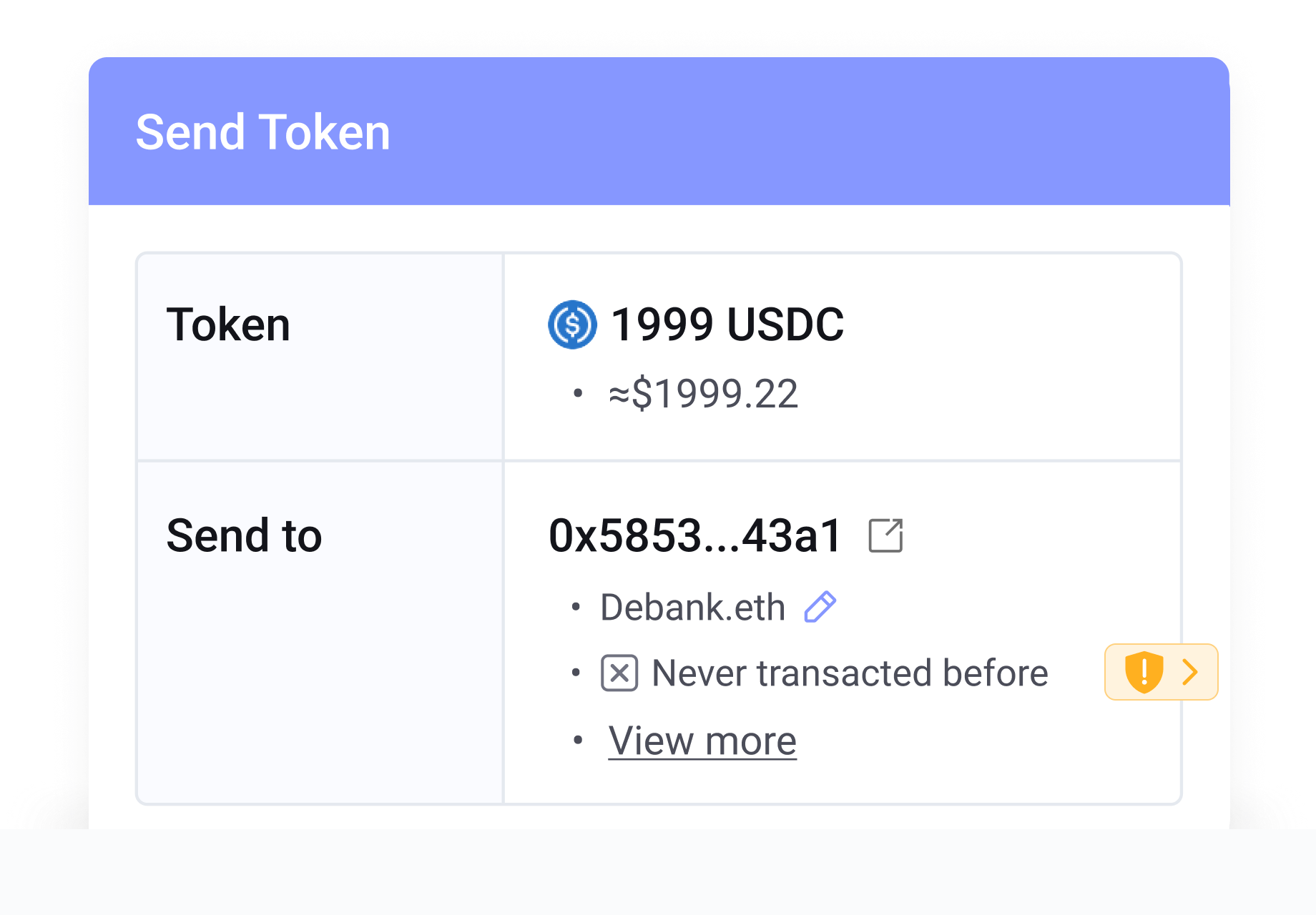
Why I keep a rabby wallet extension in my bar
Here’s the thing.
The extension is the rabby wallet extension for Chrome and it deserves attention.
It surfaces transaction simulation, approval management, and multi-chain context in ways fit for pros.
Initially I thought that browser wallets would never catch up to dedicated desktop tools, but Rabby’s approach to simulating ERC-20 behavior and showing method-level details changed my view because you can actually see calldata implications before you sign which reduces surprise failures.
If you use Chrome, it’s worth installing and stress-testing with smaller moves.
Really?
A couple of nuanced features stood out to me during stress tests.
First, the granular approval manager that groups token approvals by spender.
Second, the cross-chain transaction flow that keeps contexts per-chain but still allows atomic-like simulation so you don’t accidentally approve on one chain when you meant another, which is a small detail until it goes sideways and then it’s painful.
Third, a clear gas breakdown that doesn’t assume you know every RPC quirk.
Whoa!
But nothing is perfect across all dimensions for every user.
I ran into rare RPC timeouts and a couple UI rough edges when toggling chains quickly.
Also, some advanced DeFi primitives like flashloans or on-chain order books still need off-extension tooling or custom scripts to fully simulate because extensions can’t replicate a full node’s trace-level fidelity without more backend support.
Still, the tradeoffs felt reasonable compared to the convenience.
I’m not 100% sure, but…
For security I paired the extension with a hardware signer on more sensitive flows.
That meant using the extension for simulation and preview while moving signing responsibility offline.
On one hand that adds friction, though on the other hand it prevents a compromised extension from turning a bad approval into a drained account when the approval scope is large and ERC-20 tokens are cheap to transfer out.
Balance convenience against the criticality of your on-chain funds.
Okay.
If you’re building bots or arbitrage strategies the extension’s simulation can surface hidden failure modes.
I tested a sandwich attack scenario and it flagged potential slippage windows early.
That said, no extension replaces thorough testing on testnets and monitoring tooling, because sims are approximations and DeFi protocols change their internals, so keep on-chain dry runs and scripted checks as part of your workflow.
Use the extension as a guardrail, not as an oracle of truth.
Here’s what bugs me about some wallets.
They over-simplify approvals into a binary ‘allow’ or ‘reject’ choice.
That makes power users trade away contextual risk information for speed.
A preferable pattern, seen in the better extensions, is to offer granular revoke, time-limited approvals, and contextual warnings based on token types and spender reputations so users can make nuanced choices.
Rabby nails most of this pattern well enough that I keep it in my extension bar even when I’m testing other tools.
Something felt off about the the way one competitor displayed fees, and I kept poking at it.
Actually, wait—let me rephrase that.
I mean the presentation hid effective dollar costs behind layered gas estimates which made true cost evaluation annoying.
So I started doing the manual math and then automating those checks into a small script to validate the sim’s outputs, which helped me trust the extension more.
Somethin’ as small as a clearer fee line saved me time and money repeatedly.
Common questions from power users
Can an extension really simulate complex multi-step DeFi ops?
Yes, but with caveats — good extensions simulate calldata paths and token flows well enough to show likely token output and slippage, though they approximate node-level traces and can’t always predict MEV or external relay behavior, so use them alongside testnet runs.
Should I always approve tokens for one-click trading?
No — prefer time-limited or single-use approvals when possible, and use granular revoke tools; speed is useful, but it’s very very important to control approval scopes for high-value tokens.
Does pairing a hardware signer defeat extension convenience?
Somewhat — yes it adds steps, but that friction is intentional; for sizeable positions it’s worth the extra confirmation layer and it lets the extension serve as a preview and analysis tool while signing stays offline.